Timber Score TimberForge
Timber value, harvest economics, species mix, mill proximity, site productivity, and confidence.

LandForge scans rural land listings, satellite imagery, parcel records, market comps, timber signals, infrastructure, terrain, and risk layers — then turns the evidence into scores, recommended strategies, and full report analysis.
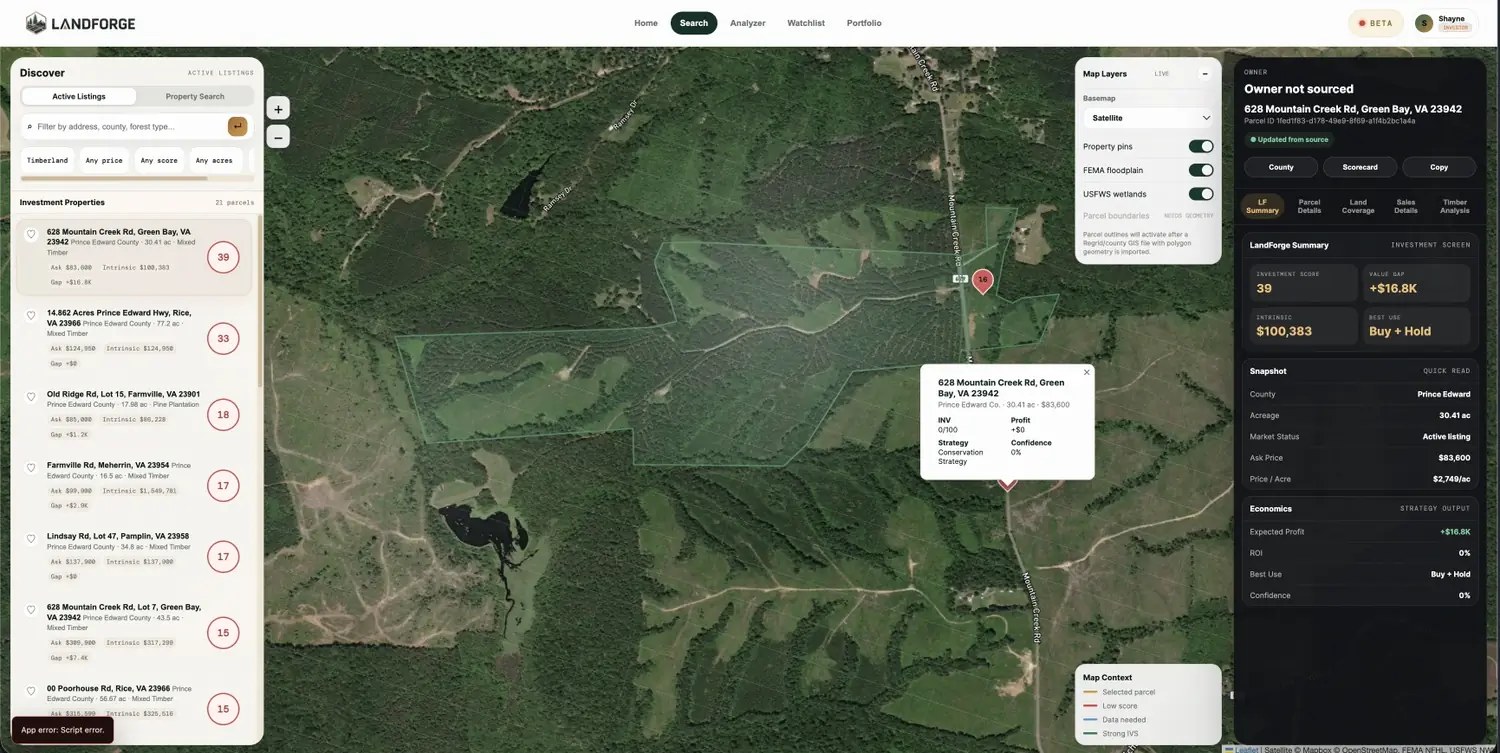
Harvest + Resell is the highest-confidence path after comparing timber value, comps, hold cost, and exit demand.
Parcel data is the starting point. LandForge is the analysis layer: it applies industry-guided score engines, AI-supported evidence review, and transparent assumptions to answer what the parcel can become.
LandForge is the parent brand for specialized score engines. TimberForge is the first productized experience, but the system is designed to evaluate timber, energy, development, income, resale, and market timing from one analysis platform.
Timber value, harvest economics, species mix, mill proximity, site productivity, and confidence.
Acreage, slope, irradiation, grid proximity, land-use constraints, and lease-option potential.
Wind resource, setback constraints, terrain, transmission access, permitting, and offtake feasibility.
Soils, drainage, water, tillable acres, land cover, access, and productivity signals for rural use.
Zoning, utilities, road frontage, entitlement path, septic risk, density, and exit readiness.
Truck access, zoning fit, power, laydown suitability, proximity to demand, and nuisance constraints.
Income, repair assumptions, taxes, insurance, vacancy risk, rent comps, and hold-period yield.
Exit value, liquidity, comps, buyer demand, listing strategy, and confidence-adjusted marketability.
The first experience focuses on whether the trees pay for the dirt. The next paths remain waitlist-driven until enough investors, developers, brokers, and operators tell us where to build next.
Built for buyers who need to know whether timber value, market timing, and resale path align.
For users who create value by changing a parcel’s use, utilities, frontage, zoning, and exit readiness.
For users focused on pricing, holding, buying, selling, and timing market exposure.
Scan active listings, see mapped parcel context, apply layers, and open a right-side underwriting panel with scores, signals, and the recommended path forward.
The analyzer compares normal resale against the highest-and-best-use strategy, exposes assumptions, and converts model output into a decision a team can debate.
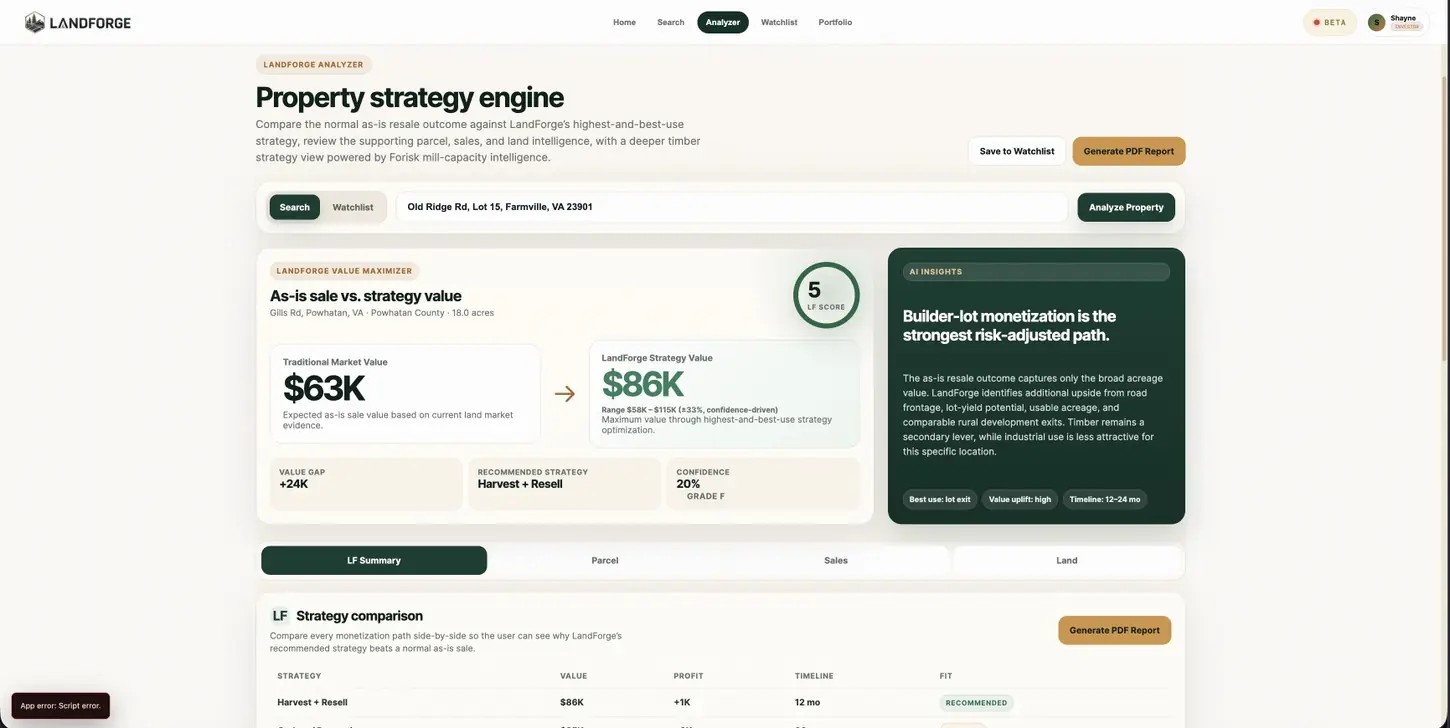
LandForge reports package scores, recommended strategies, timber analysis, comps, assumptions, confidence, and the evidence checklist into a format built for investor review.
TimberForge analysis · generated report preview
AI helps organize evidence, compare strategies, explain assumptions, and generate reports. The goal is not a black-box answer — it is a decision surface that shows why the score exists and what would change it.
Request access →No. Parcel data is an input. LandForge applies score engines and strategy analysis on top of parcel, satellite, market, timber, terrain, and infrastructure evidence.
Scores are supported by source notes, validation cases, confidence labels, and assumptions that can be reviewed, challenged, and updated after field diligence.
AI parses records, summarizes evidence, flags gaps, compares strategies, and drafts reports. It does not replace expert review; it accelerates it.
Satellite and canopy layers help estimate forest cover, operable acres, land condition, access context, slope, and change signals before a site visit.
Yes. LandForge is designed so foresters, investors, and operators can adjust assumptions, add field data, and improve confidence over time.
Score summary, recommended strategy, evidence checklist, market comps, timber assumptions, financial bridge, risk notes, and next-step diligence items.
Shape the first TimberForge release with real land feedback and the score explanations you need to make the call.
Request Beta Access →